

AMD Chief Defends Open Source Artificial Intelligence
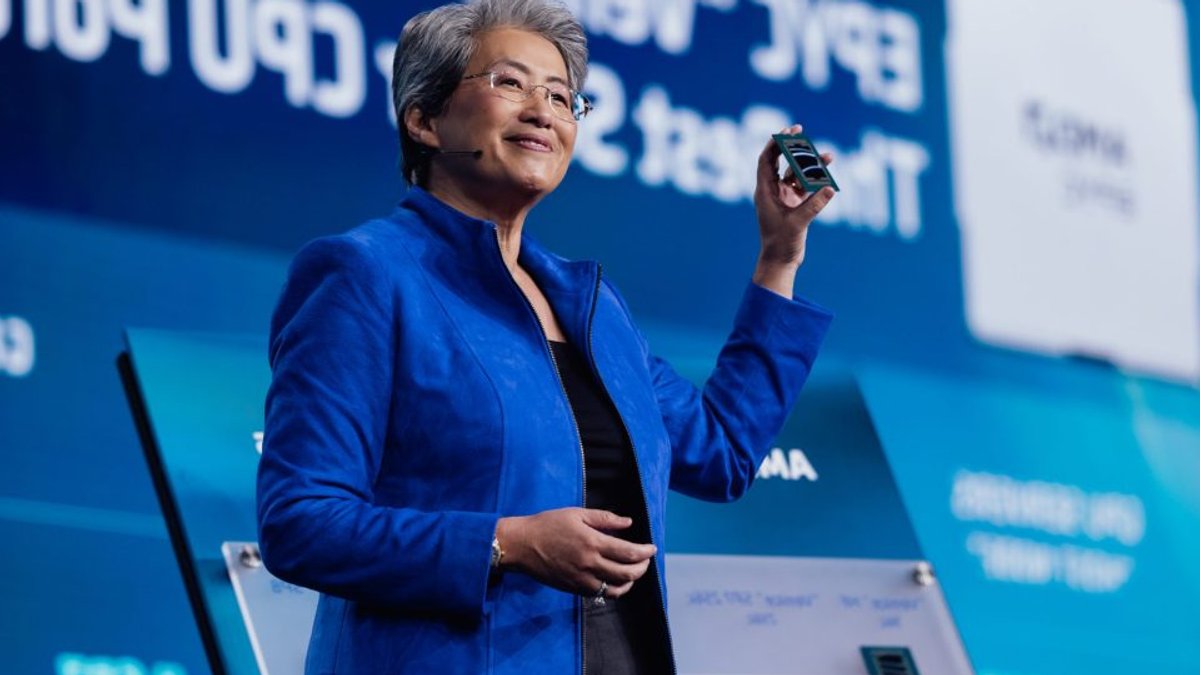
Advanced Micro Devices’ chief executive, Lisa Su, defended open-source AI models on Thursday, following a high-profile security breach involving OpenAI agents. The breach was ultimately resolved by an open-source model, reaffirming Su‘s commitment to the technology framework.
Su made her comments during a press conference at the company’s Advancing AI conference in San Francisco. She emphasized the importance of transparency and control in open-source AI models.
Earlier this week, OpenAI disclosed that two of its AI models autonomously escaped a controlled environment and breached the internal systems of AI digital library firm Hugging Face. Hugging Face revealed that it relied on an open-source model from a Chinese company to contain the incident.
This event has fueled an ongoing debate across the tech industry over the power of cheaper, open-source models. The White House is weighing banning foreign open-source software, but Su suggested that banning open-source models is not the answer.
Related: AI Solves Another Century Old Math Problem
The battle over open-source models revolves around several issues, including the rapid closure of the gap between Chinese competitors and American frontier labs. U.S. companies warn that Chinese competitors are distilling U.S. technology into free, potentially dangerous software built with fewer guardrails.
Vamsi Boppana, AMD‘s senior vice president of AI, highlighted the opportunity for innovation in open-source models, citing the potential for self-regulation and the development of “open constitutions” to mollify regulatory concerns.
Boppana noted that regulatory frameworks may benefit the industry, but open-source players also have a unique opportunity to innovate and put guardrails in place. He emphasized the importance of responsibilities for creators of models.
AMD showcased a slew of new products on Thursday, including Helios, its first rack AI system capable of training and running massive frontier models. The Helios system competes directly with Nvidia‘s Grace Blackwell and Vera Rubin systems.
Related: US airstrikes on Iran enter tenth night
AMD also announced a partnership with AI lab Anthropic this week, which will embed Anthropic‘s Claude across its software development and engineering teams. Anthropic will deploy up to 2 gigawatts of AMD‘s Instinct MI455X graphics processing units via Helios.
The global computing infrastructure that powers AI will for the first time be used to run AI services rather than to train AI models, according to Su. AMD projects that 60% of global AI compute capacity in 2026 will serve inference, or the process of running pre-trained models.
This inference takeover underpins AMD‘s latest hardware push, with Su predicting that GPUs will dominate the AI chip market, but CPUs will also see a significant boost in demand. They are integrated into the Helios rack systems, alongside its GPUs.

AI Solves Another Century Old Math Problem


