


Local money drives N158trn equities rally as foreign investors retreat
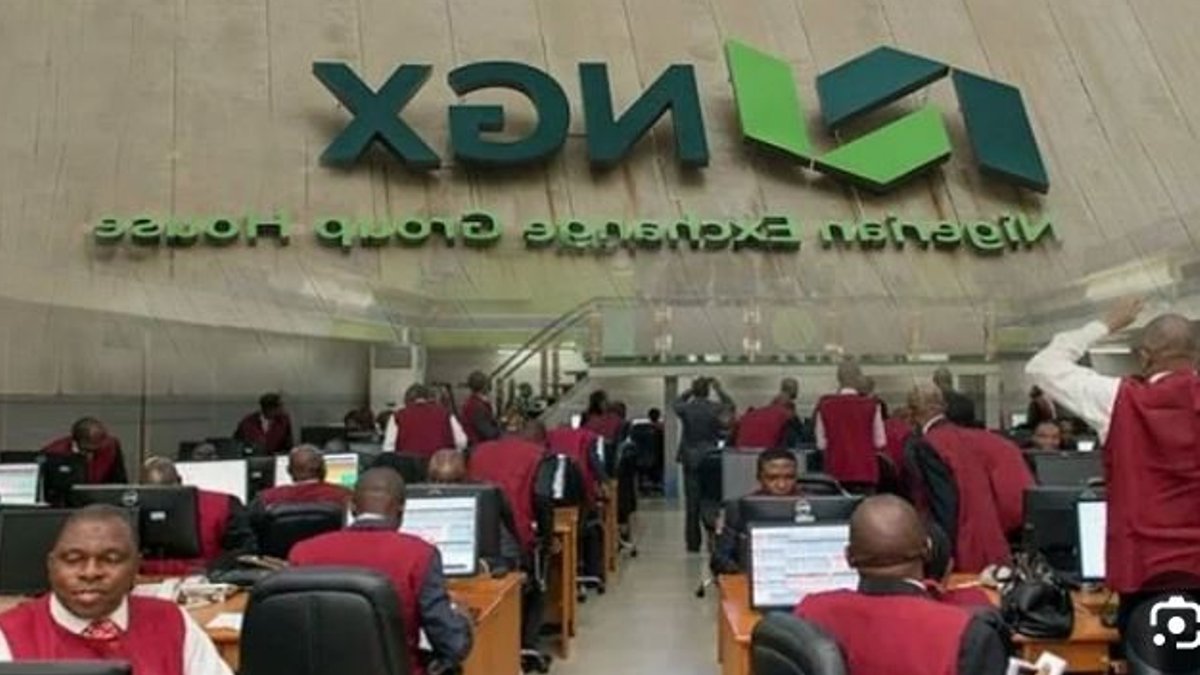
Nigeria’s stock market has seen a significant surge in 2026, with the NGX All-Share Index gaining 57 percent in the first seven months of the year. The total market capitalization rose by about N58.9 trillion to N158.2 trillion at the end of July.
Despite the market’s strong performance, foreign investors have been cautious, accounting for only 12.07 percent of equity transactions during the first half of the year. This is down from 27.08 percent in the same period of 2025.
The decline in foreign participation has been filled by Nigerian investors, including pension funds, asset managers, and retail participants. According to analysts, this development signals a potentially important maturation of Nigeria’s capital market.
A stronger domestic investor base can provide greater stability when global investors retreat, reducing the market’s exposure to sudden portfolio reversals. However, foreign capital remains important for liquidity, valuation discovery, and foreign exchange inflows.
Temilola Adeyemi, head of Coronation Research, Macro, said the development reflected a fundamental change in how Nigerian investors were managing their wealth. Investors are thinking more about spreading their portfolios across different asset classes.
Abdulrauf Bello, investment expert and associate vice-president for investment management at Cowrywise, identified several factors behind the stronger local appetite, including the increasing attractiveness of naira-denominated assets and changes in Pension Fund Administrators’ equity allocations.
Domestic Investors Drive Market Growth
NGX data shows that total equity transactions more than doubled to N9.60 trillion in the first half of 2026, up from N4.19 trillion a year earlier. Domestic transactions accounted for N8.44 trillion of that amount, up from N3.06 trillion in the first half of 2025.
Related Post: Cyber insurance gaps grow as digital threats rise
Foreign transactions rose only marginally, from N1.13 trillion to N1.16 trillion. The decline in foreign participation was not accompanied by a contraction in overall market activity, as domestic investors expanded rapidly enough to fill the space.
Aigbovbioise Aig-Imoukhuede, managing director of Coronation Asset Management, said the key development was not necessarily foreign investors abandoning Nigeria, but the much faster expansion of domestic activity.
The increased presence of domestic institutional capital is changing the structure of the market at a time when international investors remain cautious. Abdulrauf Bello, investment expert and associate vice-president for investment management at Cowrywise, said foreign participation actually increased in absolute terms between H1 2025 and H1 2026, but domestic participation grew much faster.
He identified several factors behind the stronger local appetite, including the increasing attractiveness of naira-denominated assets as inflation moderates, changes in Pension Fund Administrators’ equity allocations, improved corporate performance amid greater FX stability and the growing role of technology in opening the equity market to retail investors.
“Structural improvements in the market, particularly the role of technology in democratising retail access to equities,” have been significant, Bello said, noting that retail participation had risen from an average of about 20 percent to 40 percent.
The decline in foreign investors’ share of Nigeria’s equities market does not amount to a wholesale withdrawal from Nigerian assets, analysts said, although the direction of their transactions points to continued caution.
Foreign investors traded N1.16 trillion worth of equities in the first half of 2026, marginally higher than the N1.13 trillion recorded in the corresponding period of 2025.
However, the composition of those flows was less favourable. Foreign outflows increased 19.49 percent year-on-year to N688.4 billion, while inflows declined 15.64 percent to N471.77 billion.
Related Post: Cyber insurance gaps grow as digital threats rise
The result was a net selling position for foreign portfolio investors, showing the subdued appetite for Nigerian equities despite the broader strength of the market.
Aigbovbioise Aig-Imoukhuede, managing director of Coronation Asset Management, said the figures showed that the key development was not necessarily foreign investors abandoning Nigeria, but the much faster expansion of domestic activity.
“What changed was the scale of domestic participation, which expanded at a far more significant pace of 129.1 per cent,” he said.
He noted that foreign investors had alternative instruments offering attractive returns, particularly short-dated Nigerian government securities with yields close to 20 percent.
“From a pure risk-adjusted perspective, that allocation decision was understandable,” Aig-Imoukhuede said.
Muda Yusuf, chief executive officer of the Centre for the Promotion of Private Enterprise (CPPE), similarly argued that the decline in foreign equity participation should be viewed partly as portfolio rebalancing rather than a fundamental loss of confidence in Nigeria.
“Nigerian Treasury bills and government bonds continue to offer relati

Cyber insurance gaps grow as digital threats rise


