


Granite City charts path beyond oil
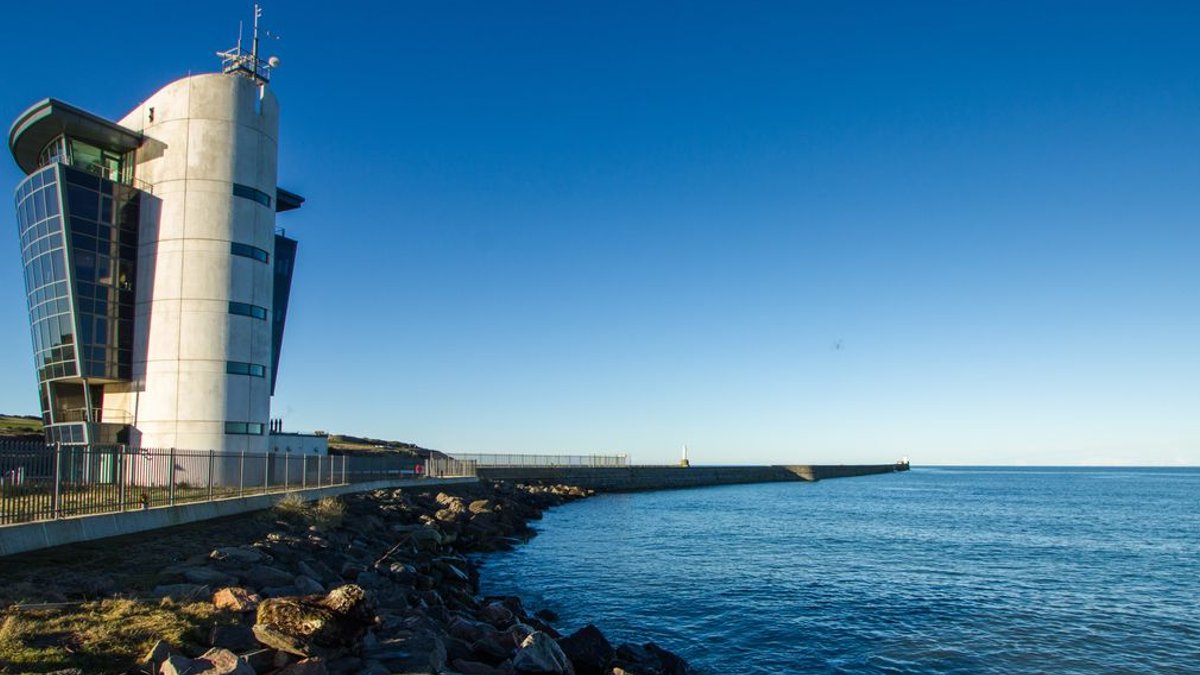
Mention Aberdeen and the word ‘oil’ usually follows quickly. That association began soon after black gold was discovered beneath the North Sea in 1969. Now, the Granite City wants to swap its title as ‘the oil capital of Europe’ for a greener moniker and become a centre for the renewables revolution.
The phrase energy transition is seldom far from the lips of industrialists and politicians in the North East as Scotland handles its way to net zero carbon emissions by 2045. This target is five years ahead of the goal for the UK as a whole.
Port Expansion and Wind Opportunities
“The North East is on the cusp of truly transformational change as we work to reposition our region as the net zero energy capital of Europe,” says Maggie McGinlay. She is the chief executive of the company set up to develop the Energy Transition Zone (ETZ) around the new Aberdeen Harbour.
Related: Cladding levy on builders put back to 2028
ETZ was launched last April to develop the energy work begun by Opportunity North East (ONE). That body was set up by Sir Ian Wood, the former boss of energy services giant Wood Group, to help diversify the region’s economy. McGinlay describes the £350m south harbour expansion as a “turning point”, thanks to “its deeper water, non-tidal access, and extensive quayside, providing the capacity to host the energy industry’s largest vessels”. She expects the enlarged port will help Aberdeenshire’s businesses to win supply chain work for the offshore wind farms that will be erected as part of the recently-announced ScotWind licensing round.
City Center Regeneration Plans
Other proposals for Aberdeen’s seafront include a stadium for the Dons, the city’s illustrious football club. The plans also feature an amphitheatre, a pier, and an upgrade for the famous beach ballroom. The council’s growth and resources committee backed the scheme in November.
These projects are part of the city council’s wider £150m scheme. This includes pedestrianising the central part of Union Street and redeveloping the city market. “These plans are only the beginning of a process that we envisage will turn Aberdeen into a city that not only residents of the North East, but indeed the whole of Scotland, will be proud of,” said council leader Jenny Laing.
Hydrogen and Carbon Capture Setbacks
Hydrogen is another plank in the region’s energy strategy. Excess renewable electricity can be used to split water into hydrogen and oxygen. The hydrogen then becomes a potential fuel for heavy transport, including aircraft, ferries, and trains.
Related: Advisors spread risk in stock-heavy portfolios
McGinlay says energy giant BP’s joint venture with Aberdeen City Council to create a hydrogen hub could create up to 500 jobs. That project was announced last autumn.
The only apparent fly in the ointment is the UK Government’s decision not to include Aberdeenshire’s carbon capture and storage project in its first wave of demonstration sites. These sites take carbon dioxide captured from factories and power stations and pump it into empty oil and gas wells beneath the seabed. “The geology off the North East coast provides world-class sites for large-scale carbon dioxide storage,” McGinlay said.
Workforce Transition and Investment
McGinlay points to a study by the Energy Technologies Institute and Robert Gordon University. It found 90% of current jobs in oil and gas are transferable to renewables. ETZ runs several programmes to help businesses tap into the transition, with more than 40 companies – including Aubin, Optimus, and others, involved in the process.

Cladding levy on builders put back to 2028


